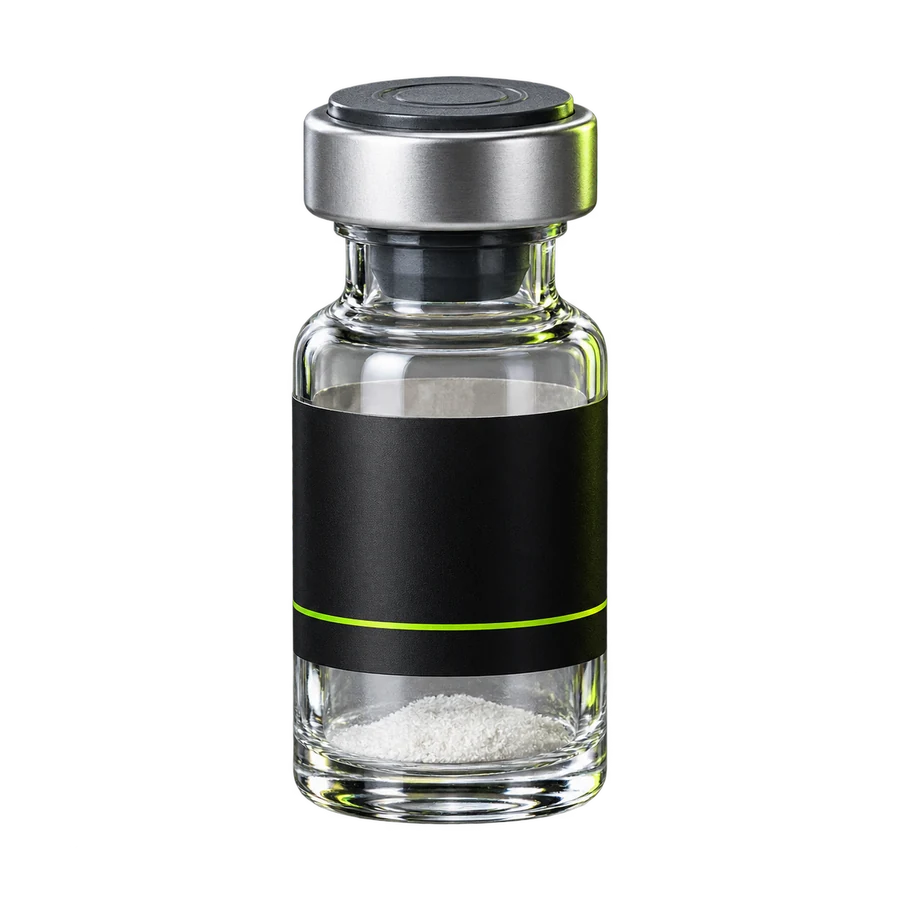
Research chemicals is a market term for any compound sold for laboratory use outside a finished-product quality system, including small molecules. Research peptides are the subset built from amino acids joined by peptide bonds, usually forty residues or fewer. Both carry a Research Use Only label, and the law judges both by intended use rather than by the label.
- Research chemicals is a market category for compounds sold for laboratory use outside any finished-product quality system; research peptides are the subset built from amino acids joined by peptide bonds.
- The FDA defines a protein as an alpha amino acid polymer with a defined sequence greater than 40 amino acids (85 FR 10057, effective March 23, 2020); 40 or fewer is a peptide.
- The Research Use Only phrase comes from 21 CFR 809.10(c)(2)(i), the labeling rule for in vitro diagnostic products.
- Under 21 CFR 201.128, intended use is shown by labeling claims, advertising, statements and the circumstances of distribution, not by a disclaimer.
- 21 USC 813 treats a controlled substance analogue intended for human consumption as Schedule I, and subsection (c) says a not-for-consumption label alone is not enough to disprove that intent.
- The documentation that separates a well-supplied peptide from a generic research chemical is a lot-specific certificate: identity by mass, purity by HPLC, issued by a laboratory that will confirm it.
What does the term research chemicals cover?
Research chemicals is a market category, not a chemical one. It covers compounds sold for laboratory use that sit outside any finished-product quality system: no drug approval, no pharmacopeial monograph, no diagnostic clearance. The term grew up in two separate trades that still share it. One is the legitimate supply of reagents, reference materials and novel compounds to laboratories. The other is the sale of designer substances that mimic controlled drugs, marketed with a research label to keep them at arm's length from drug law.
Because the term describes how something is sold rather than what it is, it tells a buyer very little about the molecule. A research chemical can be a simple organic acid, a fluorescent dye, a synthetic cannabinoid or a peptide. The only thing the members of the category have in common is the absence of a regulated quality framework around them, which is why the documentation a seller provides matters more here than in any other chemical market.
Research peptides are a subset of that category, defined by chemistry rather than by trade. The rest of this guide takes the two words apart, chemistry first and regulation second, and then shows where they still overlap.
- 40 or fewer amino acids: a peptide, regulated as a drug by intended use
- More than 40: a protein, regulated as a biological product (85 FR 10057)
- Either way, the RUO label states intended use and certifies nothing about quality
What makes a compound a peptide?
A peptide is a chain of amino acids joined by amide bonds between the carboxyl group of one residue and the amino group of the next. That bond has its own name, the peptide bond, and the peptide bond guide covers its chemistry. The International Union of Pure and Applied Chemistry sets the nomenclature: residues are named by three-letter and one-letter codes, chains are written from the N-terminus to the C-terminus, and a chain of two residues is a dipeptide, three a tripeptide, and so on.
Where a peptide stops and a protein begins has a regulatory answer in the United States. In a final rule published at 85 FR 10057 on February 21, 2020, the Food and Drug Administration defined a protein as any alpha amino acid polymer with a specific, defined sequence that is greater than 40 amino acids in size. A chain of 40 or fewer is therefore a peptide for regulatory purposes, and a longer one is a protein, which the agency regulates as a biological product. Most research peptides in commerce fall well under that line: a tripeptide such as GHK is three residues, BPC-157 is fifteen, and semaglutide is thirty-one.
The chemistry sets the rest of the category's character. Peptides are made by solid-phase synthesis, purified by reversed-phase HPLC, identified by mass spectrometry and sold as lyophilized powder with a counterion, usually trifluoroacetate or acetate. A small-molecule research chemical may share none of that. It is often an oil or a crystalline solid, characterized by NMR rather than mass alone, and stable at room temperature in ways a peptide is not.
Where does the Research Use Only label come from?
The Research Use Only label is a phrase from the FDA's labeling regulation for in vitro diagnostic products. Under 21 CFR 809.10(c)(2)(i), a product in the laboratory research phase of development must carry the statement "For Research Use Only. Not for use in diagnostic procedures." The agency's 2013 guidance on distributing RUO and IUO products explains what the label does: it marks material that sits outside the design controls and clearance pathways that bind a finished diagnostic, and it restricts how the product may be used.
Both the research-chemical trade and the research-peptide trade borrowed that phrase. On a peptide vial it is usually expanded to the form this site uses: FOR LABORATORY AND IN-VITRO RESEARCH USE ONLY. NOT FOR HUMAN OR ANIMAL CONSUMPTION. NOT FOR PERSONAL, MEDICAL, DIAGNOSTIC, THERAPEUTIC, OR RECREATIONAL USE. The RUO peptide guide explains what that label does and does not say about the contents of a vial.
Here the two categories behave the same way. The label is a statement of intended use. It certifies nothing about identity, purity or quality, and it does not change what the molecule is. A research chemical and a research peptide carrying identical RUO wording can be documented to completely different standards, and the label gives no way to tell which.
How does federal law treat the two categories?
Federal law looks past the label to intended use in both categories, but it reaches them through different statutes. For drugs and peptides, the controlling idea is in 21 CFR 201.128. Intended use is the objective intent of the people responsible for the labeling, and that intent may be shown by labeling claims, advertising, oral or written statements, or the circumstances surrounding distribution. A seller whose product pages, emails or social posts describe effects in people has established a drug intended use, and the FDA's warning letters to peptide sellers cite exactly that regulation when they do.
For designer substances, the controlling statute is the Controlled Substances Act. Section 802(32) defines a controlled substance analogue as a substance whose chemical structure is substantially similar to a Schedule I or II substance and which has, or is represented to have, a substantially similar stimulant, depressant or hallucinogenic effect. Section 813 then provides that an analogue intended for human consumption is treated as a Schedule I substance, and lists the evidence a court may weigh: marketing, labeling, price, and whether the seller knew it was meant to be consumed. Subsection (c) adds that a label saying the substance is not for human consumption is not, by itself, enough to show it was not intended for that.
| Question | Research chemicals (small molecules) | Research peptides |
|---|---|---|
| Defining statute | Controlled Substances Act, 21 USC 802(32) and 813, where the structure resembles a scheduled drug | Federal Food, Drug, and Cosmetic Act, drug definition by intended use |
| Test applied | Structural similarity plus intent for human consumption | Intended use shown by labeling, advertising and circumstances, 21 CFR 201.128 |
| Does the RUO label settle it? | No; 21 USC 813(c) says the label alone is not enough | No; the FDA reads the surrounding claims, not the disclaimer |
| Size rule | None | Over 40 amino acids is a protein and a biological product, 85 FR 10057 |
The two columns agree on the point that matters for a seller: the label does not do the work. What is said around the product does. The are peptides legal guide goes further into the peptide column.
What documentation separates the two in practice?
The documentation that separates a well-supplied research peptide from a generic research chemical is the lot-specific analytical record. A peptide lot can be identified by its mass against a theoretical value, assayed for purity by reversed-phase HPLC, and measured for net peptide content, and each result can be issued under a lot number by a laboratory that will confirm it. The certificate of analysis guide walks through those fields.
Small-molecule research chemicals can be documented just as well, and reagent suppliers to institutional laboratories do it as a matter of course, with NMR spectra, melting points and chromatographic purity on the certificate. The designer-substance end of the research-chemical trade usually provides none of it, and that absence is the practical dividing line a laboratory buyer should look for. The category name does not predict documentation. The seller's record does.
A second practical difference is the safety data sheet. A peptide supplier can and should provide one, and the peptide safety data sheet guide describes what it contains. For a novel small molecule with no published toxicology, the sheet is often blank where it matters, which is itself information about how much is known.
Where do the categories overlap, and where do they part?
The categories overlap wherever a peptide is sold in the research-chemical manner: with an RUO label, outside a quality system, and with the surrounding copy doing the regulatory work the label cannot. A peptide listed beside descriptions of its effects in people is a research chemical in every sense that matters to a regulator, and the chemistry of the amide backbone does not rescue it.
They part on four points. Chemistry: peptides are a defined structural class with a size line at 40 residues; research chemicals are anything. Analytical method: peptides are identified by mass and assayed by HPLC in a standard way; small molecules need structure-specific methods. Stability: peptides are hygroscopic lyophilized solids with a counterion, and most need cold, dry storage; many small molecules are shelf-stable. Statute: an analogue of a scheduled drug is reached through the Controlled Substances Act, a peptide through the drug definition in the Food, Drug, and Cosmetic Act.
LabFirst Peptides sells research peptides, not research chemicals in the wider sense, and every lot carries a Kovera Labs certificate that can be checked from the certificate page. The distinction this guide draws is the one a laboratory buyer can act on: ask what the molecule is, ask who measured it, and read the seller's words as a regulator would.
Bottom line
Research chemicals is a way of selling; research peptides is a kind of molecule. A peptide is amino acids joined by amide bonds, forty or fewer for regulatory purposes, identified by mass and assayed by HPLC. Both categories wear the same RUO label, and under both the Controlled Substances Act and the Food, Drug, and Cosmetic Act the label is not what decides intended use. The seller's documentation and the seller's words are.
Common questions
Are research peptides research chemicals?
What is the difference between a peptide and a research chemical?
Does the Research Use Only label make a product legal to sell?
How many amino acids make a peptide a protein under FDA rules?
Is LabFirst Peptides legit?
More laboratory guides
Sources
- 21 CFR 809.10, Labeling for in vitro diagnostic products. Paragraph (c)(2)(i) is the origin of the statement "For Research Use Only. Not for use in diagnostic procedures."
- 21 CFR 201.128, Meaning of intended uses. Intended use as the objective intent of those responsible for labeling, shown by labeling claims, advertising, statements and the circumstances of distribution.
- 21 U.S. Code 813, Treatment of controlled substance analogues. An analogue intended for human consumption is treated as Schedule I; the factors a court may weigh; and the rule that a not-for-consumption label is not by itself sufficient. The analogue definition is at 21 USC 802(32).
- FDA final rule, Definition of the Term Biological Product, 85 FR 10057 . Defines a protein as any alpha amino acid polymer with a specific, defined sequence greater than 40 amino acids in size, codified at 21 CFR 600.3(h)(6), effective March 23, 2020.