Compounded semaglutide is semaglutide prepared by a state-licensed pharmacy or an outsourcing facility instead of under an approved drug application. FDA says compounded drugs are not FDA approved. FDA declared the semaglutide shortage resolved on February 21, 2025, and the compounding grace periods ended in April and May 2025.
- FDA states that compounded drugs, including compounded semaglutide, are not FDA approved and receive no FDA review of safety, effectiveness or quality before marketing.
- FDA declared the semaglutide shortage resolved on February 21, 2025.
- FDA's enforcement discretion for compounded semaglutide ended April 22, 2025 for 503A pharmacies and May 22, 2025 for 503B outsourcing facilities.
- FDA counted 990 adverse event reports involving compounded semaglutide as of May 31, 2026.
- PubChem lists semaglutide (CID 56843331) as C187H291N45O59 with an average molecular weight of 4,114.
What this guide covers
Why could pharmacies make their own semaglutide in 2023 and 2024, and why did FDA say they had to stop in 2025? The short answer is a shortage list. The longer answer is below.
This guide sticks to regulation. It explains what compounding means, how section 503A pharmacies differ from section 503B outsourcing facilities, what FDA did when the semaglutide shortage ended, and where research-grade semaglutide powder fits, which is outside medicine entirely. Every date comes from an FDA page we read on October 11, 2026. Nothing here is advice about obtaining, using or judging any medicine. That conversation belongs with a licensed clinician.
- Nov 27, 2013: DQSA creates 503B
- Shortage listing lets compounders supply
- Feb 21, 2025: shortage declared resolved
- Apr 22, 2025: 503A discretion ends
- May 22, 2025: 503B discretion ends
What is compounded semaglutide?
Compounded semaglutide is semaglutide made by a compounder instead of by the holder of an approved drug application. In FDA's words, compounding is a practice in which a licensed pharmacist, a licensed physician or, at an outsourcing facility, someone supervised by a licensed pharmacist "combines, mixes or alters ingredients of a drug to create a medication tailored to the needs of an individual patient."
FDA is direct about approval. Compounded drugs are not FDA approved, "which means the agency does not review their safety, effectiveness or quality before they are marketed." Semaglutide is the active ingredient in FDA-approved prescription medicines, and those passed review. A compounded product made from the same ingredient is a separate thing in law.
Chemically, semaglutide is a modified peptide with a fatty side chain. PubChem lists it as CID 56843331, formula C187H291N45O59, average molecular weight 4,114.
Compound semaglutide under 503A and 503B
Section 503A and section 503B of the Federal Food, Drug, and Cosmetic Act set out two lanes for compounders. The Drug Quality and Security Act, enacted November 27, 2013, created the 503B lane. FDA says Congress acted in response to the 2012 fungal meningitis outbreak.
Under 503A, a state-licensed pharmacy or physician compounds against prescriptions for individual patients, and those compounders are exempt from current good manufacturing practice. Under 503B, an outsourcing facility may fill patient-specific prescriptions or supply office stock for patients who aren't identified in advance. In exchange, it must meet CGMP and accept FDA inspections on a risk-based schedule.
Neither lane yields an approved drug. The 503B standard is closer to how a drug manufacturer works, and the outsourcing facility is still a compounder.
Why did the shortage list matter?
Compounders are generally barred from making copies of drugs already on the market. FDA describes such a copy as a product with "the same active pharmaceutical ingredient(s) (API) as the commercially available drug product in the same, similar or an easily substitutable strength" given by the same route. A prescriber can document "a change that produces a significant difference" for a patient, and then the product falls outside that description.
A drug in shortage is handled differently. While semaglutide sat on FDA's shortage list, compounders could supply it without running into the copy limit in the usual way. That is why so much compounded semaglutide appeared in 2023 and 2024, and why the end of the shortage changed things.
When did the semaglutide shortage end?
FDA declared the semaglutide shortage resolved on February 21, 2025. It then gave compounders a fixed period of enforcement discretion before expecting them to stop making copies.
| Event | Date FDA gives |
|---|---|
| Shortage declared resolved | February 21, 2025 |
| Enforcement discretion ends for 503A pharmacies | April 22, 2025 |
| Enforcement discretion ends for 503B outsourcing facilities | May 22, 2025 |
We took these from FDA's page on compounder policies as national GLP-1 supply began to stabilize, read October 11, 2026, which showed a page date of April 1, 2026. FDA's shortage database would not load for us that day. So the status here is as of FDA's policy page, and a reader should check the database for anything newer.
Tirzepatide followed the same pattern two months earlier. Our compounded tirzepatide guide lists its dates.
What has FDA said about compounded semaglutide since?
FDA's page on concerns with unapproved GLP-1 drugs was updated October 1, 2026. It restates that compounded drugs are not approved and gives FDA's policy that they "should only be used in patients whose medical needs cannot be met by an FDA-approved drug." We report that as FDA's position and take no view on anyone's care.
The page raises three regulatory issues. Some compounders used salt forms, and FDA "does not have information on whether these salts have the same chemical and pharmacologic properties as the active ingredient in the approved drug." FDA says it has received adverse event reports involving compounded semaglutide, some of them requiring hospitalization, and it ties some of those reports to errors in how the product was measured out. And it counts 990 adverse event reports for compounded semaglutide as of May 31, 2026. A report submitted to FDA does not by itself prove a product caused the event.
Three things called semaglutide
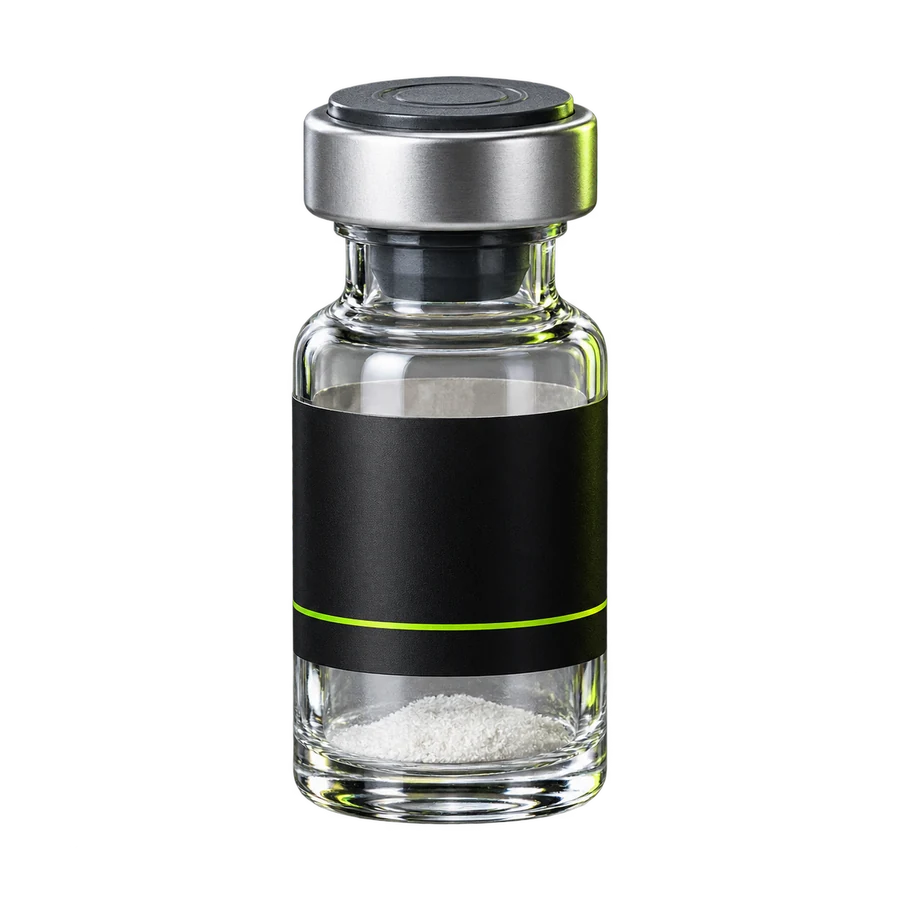
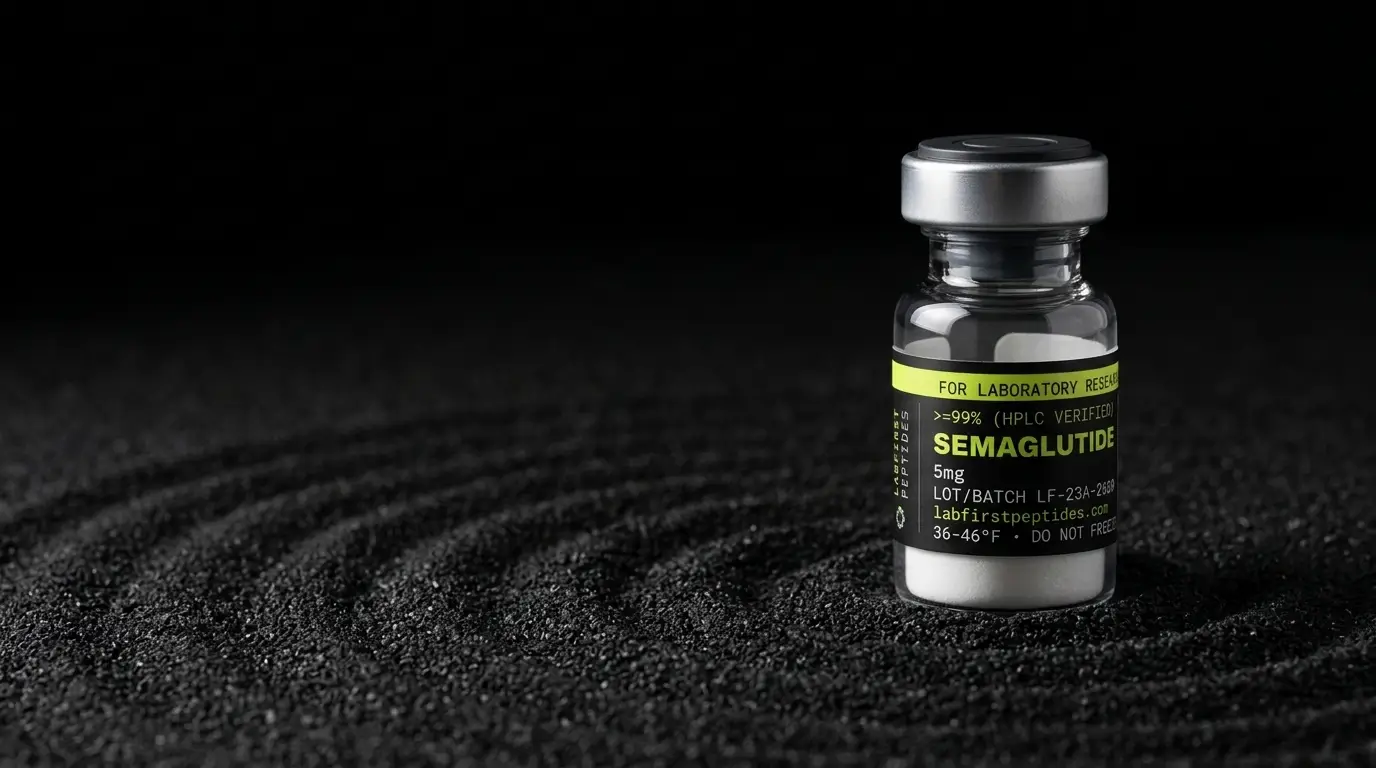
Picture three shelves. The first holds an approved prescription medicine that went through FDA's review. The second holds a compounded drug, prepared by a 503A pharmacy or a 503B outsourcing facility, which FDA says it does not review for safety, effectiveness or quality before marketing. The third holds research material: a sealed vial of lyophilized powder meant for a laboratory bench.
All three carry the word semaglutide, and that shared word is where much of the confusion online comes from. A review of a compounded product says nothing about a research lot. A research certificate says nothing about any medicine. When a source moves between those shelves without saying so, its regulatory claims deserve a second look.
For a lab buyer, the useful question is narrow. Does the paperwork for this specific lot show what the vial contains? That question has an answer on a certificate. Questions about medicines have answers only from FDA and from licensed clinicians.
How is research-grade semaglutide different from a medicine?
Research-grade semaglutide is lyophilized peptide powder for laboratory and in-vitro work. It is not compounded for a patient and it is not an approved drug. It carries no human-use labeling and should never be treated as a stand-in for a medicine. The research use only guide explains what that label commits a buyer to.
What a lab can verify is the material in the vial. The semaglutide identity guide shows how mass spectrometry checks a sample against the expected mass, and the semaglutide certificate guide reads a certificate line by line. Certificates for each lot are posted at /coa/.
FOR LABORATORY AND IN-VITRO RESEARCH USE ONLY. NOT FOR HUMAN OR ANIMAL CONSUMPTION.
How to confirm FDA's current position: step by step
- Go to FDA's page on concerns with unapproved GLP-1 drugs and note its last-updated date.
- Read FDA's GLP-1 compounder policy page for the February 21, 2025 resolution and the April and May 2025 end dates.
- Look up semaglutide in FDA's drug shortage database and read the current status.
- Where FDA's newer pages differ from this guide, go with FDA.
- Take any question about a person's health to a licensed clinician.
What to check in a claim about compounded semaglutide
- Is it called FDA approved? FDA says compounded drugs are not.
- Does it say semaglutide is in shortage today? FDA declared that shortage resolved on February 21, 2025.
- Does it involve a semaglutide salt? FDA says it lacks information on whether such salts match the approved ingredient.
- Is the regulatory claim dated and linked to FDA itself?
Bottom line
Compounded semaglutide grew under a shortage listing and lost that cover when FDA called the shortage over on February 21, 2025, with 503A and 503B grace periods ending in April and May of that year. FDA still says compounded drugs get no pre-market review. Research-grade semaglutide is laboratory material, and a certificate for its lot is the thing worth reading.
What is Semaglutide studied for?
Published research on Semaglutide investigates the areas below, which is a different question from what Semaglutide will do for anyone, a claim about a living system that nothing on this site is sold for.
What it is. A peptide that works on the GLP-1 receptor.
What the research looks at. One of the most heavily published peptides in metabolic research, with a large registered clinical record. Approved medicines containing it exist under their own brand names.
How it is thought to work. A copy of the body’s own GLP-1, changed so it lasts far longer. Two changes do that: a fatty acid chain that lets it ride on albumin in the blood, and a swapped building block that stops the DPP-4 enzyme cutting it up. Those two edits are why it stays around for days where natural GLP-1 lasts minutes.
What is not established. What is sold here is a research chemical, not a drug product. Listing it is not an approval, and not a claim that it is equivalent to, as safe as, or a fit substitute for any approved medicine.
The full record, including the certificate for the lot in stock, is on the Semaglutide product page.
Common questions
What is compounded semaglutide?
Is compounded semaglutide FDA approved?
When did the semaglutide shortage end?
How is a semaglutide compound different from research peptide?
What is a 503B outsourcing facility?
More science guides
Sources
- FDA: Human Drug Compounding. FDA's definition of compounding and its statement that compounded drugs are not FDA approved (content current as of June 15, 2026).
- FDA: Human Drug Compounding Laws. Sections 503A and 503B of the FD&C Act, outsourcing facilities, CGMP and the Drug Quality and Security Act of 2013.
- FDA: FDA clarifies policies for compounders as national GLP-1 supply begins to stabilize. Shortage resolution dates and the end of enforcement discretion for 503A and 503B compounders, plus FDA's description of a copy.
- FDA: FDA's concerns with unapproved GLP-1 drugs used for weight loss. FDA statements on compounded versions, salt forms and adverse event reports (page updated October 1, 2026).
- PubChem PUG REST: CID 56843331 (semaglutide). Molecular formula and average molecular weight, read October 11, 2026.