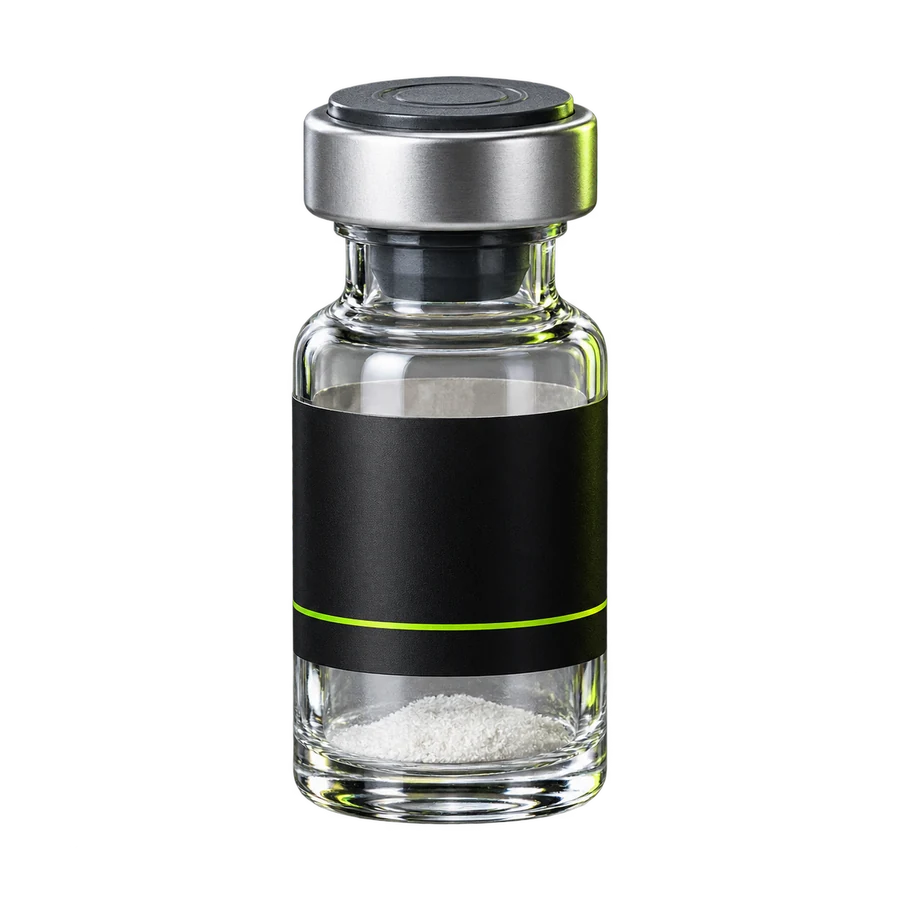
Bulk peptide storage for resellers rests on four habits. Keep stock cold, dark and dry, and save the freezer for archive stock. Rotate lots so the first to expire ships first, tracked in a written ledger. Pack for summer heat and rough handling. Inspect every delivery on arrival, while problems are still the supplier's.
- Sealed lyophilized peptides are robust; heat, light, moisture and time are the four levers that degrade them
- Refrigeration suits working inventory; long-hold archive stock belongs colder, sealed and desiccated
- Lot rotation must be first-tested-first-out, tracked in a ledger, not by memory
- Summer transit is the highest-risk leg in the whole chain; packaging and ship-day choices control it
- Storage records are commercial assets: they answer the customer question 'how was this kept?'
What degrades peptide inventory
Picture a lab tech unpacking a cold box at the bench: she checks each delivery at the door and slides the new vials behind the older ones. Bulk storage runs like a pantry for delicate goods, with shelves kept cool and dark and the oldest stock going out first.
Sealed, lyophilized peptide is among the more forgiving materials a small warehouse will ever hold, which is exactly why sloppy storage persists: the damage is slow, cumulative and invisible until a purity result finds it. Four levers do nearly all the harm. Heat accelerates every degradation route at once: aggregation, oxidation, hydrolysis of susceptible bonds. Light attacks photosensitive residues, tryptophan and methionine above all. Moisture is the sharpest lever: a lyophilized cake that has pulled ambient humidity through a compromised seal is quietly becoming a solution-phase chemistry experiment. Time multiplies the other three.
The practical consequence for a reseller is that storage is not one problem but two. Working inventory, the stock that turns in weeks, needs refrigeration, darkness and dryness, and tolerates the door opening forty times a day reasonably well. Archive stock, the depth you bought at a good price against future demand, is a different regime: colder, sealed, desiccated, boxed against light, and touched as rarely as possible. Mixing the two regimes, all of it in one fridge, forever, is how a good buy at month one becomes a marginal purity result at month ten.
The compound-level chemistry behind these rules, which residues fail how, and why some sequences are sturdier than others, is covered across our laboratory guides; this article stays at the warehouse level, where reseller money is won and lost.
Warehouse setup: the two-regime standard
A defensible small-reseller setup costs less than one spoiled kit and looks like this.
- Working store: a dedicated refrigerator, 36–46°F, dark, with vials in closed boxes rather than loose on shelves, and a cheap min/max thermometer whose readings get logged weekly. Dedicated means no food, no samples from other projects, no exceptions; shared appliances have shared door-opening patterns and shared accidents.
- Archive store: sealed secondary containers with desiccant, held cold and dark and opened on a schedule rather than on impulse. Original sealed vials, inside a gasketed container with indicating desiccant, is the standard; the desiccant color check is your moisture audit.
- Quarantine zone: physically separate shelf space for received-but-untested lots and for anything that failed or is under dispute, marked so that picking from it requires deliberate effort. Quarantine that exists only as a spreadsheet column gets picked from during the first busy week.
- Ambient staging: a packing area away from windows and heat sources, because the hour a vial spends being packed is part of its storage history too.
Temperature logging deserves its own sentence: a weekly-logged min/max record is the difference between 'we store it cold' as a claim and as a fact, and wholesale customers who have been burned elsewhere increasingly ask for exactly that fact. FOR LABORATORY AND IN-VITRO RESEARCH USE ONLY. This guide concerns inventory handling for research material under a compliant posture; nothing in it is a statement about use in people or animals.
Lot rotation and the ledger that enforces it
At laboratory scale, lot management is a nicety. At reseller scale it is the control that prevents three expensive failures: selling old stock while fresh stock ages behind it, losing the ability to scope a problem to specific orders, and discovering during a dispute that nobody can say which lot a customer received.
The rotation rule is first-tested-first-out: lots leave in the order their verification cleared, oldest first, and a lot never ships ahead of an older sibling without a written reason (a customer-specified lot, a size mismatch). Enforcement lives in the physical arrangement, new cases load behind old ones, and in the ledger, which records for every lot: supplier, receipt date, verification date and result, storage location, and every order it shipped on.
| Field | Why it exists |
|---|---|
| Lot number and compound/size | Links vial, certificate and supplier record |
| Received / verified dates and result | Establishes the FTFO queue and the quality basis |
| Storage location and regime | Answers 'how was this kept' with a fact |
| Orders shipped against the lot | Scopes any later problem to a known list |
| Disposition (active, depleted, quarantined) | Makes inventory state auditable at a glance |
The same ledger is what makes a failure survivable: when a lot goes bad, the affected-orders column converts a reputation crisis into a bounded notification list, which is the entire difference between a bad week and a bad year. The verification side of that story is covered in our guide to COA verification for bulk orders.
Inbound: receiving like the money depends on it
The receiving hour is when problems are cheapest, because they are still the supplier's. A disciplined intake runs the same short sequence every time. Photograph the outer carton before opening, then the interior packing, then the kit labels; on any dispute, those photographs are the difference between a claim and an argument, and every serious make-it-right policy, including ours, runs on a photo window measured in hours. Check the physical basics vial by case: caps seated, crimps intact, cakes intact and dry-looking rather than slumped or glassy, labels legible with lot numbers matching the paperwork. Log temperature indicators if the shipment carried them, and note transit time against the quote.
Then move everything to quarantine, draw verification samples from positions you choose, and let the lot earn its way into sellable inventory when results return. The urge to skip straight to the shelf is strongest exactly when it is most dangerous: during a stockout, with customers waiting, which is when an untested lot does the most damage the fastest.
Receiving discipline also feeds the supplier file. Transit time, packaging quality, indicator readings and damage rates per supplier are negotiation material and switching criteria, and after a few cycles the file tells you things no sales agent will: who packs for summer, who quietly changed cartons, whose quoted lead time is fiction.
Outbound: packaging and the summer problem
Your outbound leg is where storage discipline meets the carrier network, and the carrier network is indifferent to your discipline. Design packaging for the worst plausible transit: a delivery truck in August, a missed connection, a weekend in a sorting facility. For lyophilized vials the standard is layered: vial protection against crush and vibration, an opaque barrier against light, a moisture barrier, and in hot months an insulated liner, with gel packs where the compound's stability record justifies them. Sealed lyophilized material does not need refrigeration for days-long journeys. The goal in transit is protection from the heat spikes a parcel experiences, which routinely exceed ambient weather.
Operational rules do as much as materials. Ship early in the week, so parcels do not weekend in warehouses. Cut off same-day dispatch at a real time and honor it, because a parcel packed at 4 PM sits overnight somewhere. In heat waves, offer customers the choice between shipping now with upgraded packaging and holding until the forecast breaks, and record which they chose. Publish your dispatch commitment and your packaging standard; in a market where most sellers say nothing about transit, specificity converts.
And close the loop: when a customer reports a damaged or heat-suspect delivery, that is logistics telemetry. File it against carrier, route, month and packaging version, and let two seasons of data pick your packaging spec instead of the supply catalog's marketing.
The records that turn logistics into positioning
Everything above generates paper: temperature logs, lot ledgers, receiving photographs, transit telemetry. Filed casually, it is overhead. Organized, it is the answer to the two questions every serious buyer eventually asks a reseller: how do you know the material is genuine, and how has it been kept since you got it? Competitors who cannot answer lose exactly the customers most worth having, the labs and repeat wholesale buyers who ask before ordering.
The storage story also belongs on the storefront, in specific rather than reassuring language: the storage regime by name, the dispatch cutoff, the packaging standard, the lot-tracking practice. Our own product pages carry the dispatch and returns position in plain terms for the same reason; stated logistics is a trust signal because it is checkable on the first order.
None of this is glamorous, and that is rather the point. In a market whose failures are mostly invisible until a purity result or a summer shipment finds them, the reseller running two storage regimes, a live ledger, photographed receiving and season-aware packaging is operating a different business from the one running a fridge and optimism, at a cost difference of a few hundred dollars and a weekly habit. The customers can tell. Eventually, so can the balance sheet.
Common questions
Do bulk peptides need to be frozen in storage?
How should peptides be packed for shipping in summer?
What records should a peptide reseller keep on inventory?
What is first-tested-first-out rotation and why not just FIFO?
How much does proper storage infrastructure cost a small reseller?
More handling guides
Sources
- Wang, W. Lyophilization and development of solid protein pharmaceuticals. International Journal of Pharmaceutics 203(1-2):1-60 . Basis for the four-lever framing and the two-regime storage standard: this review covers the freezing and drying stresses that degrade lyophilized material and the excipient and moisture factors that govern its shelf stability.
- USP General Chapter <1079>, Risks and Mitigation Strategies for the Storage and Transportation of Finished Drug Products. Basis for treating transit as the highest-risk leg and packaging against excursions rather than ambient weather. The chapter sets out mean kinetic temperature as the way an excursion is judged, which is why a single hot afternoon in a trailer matters more than the monthly average at either end.
- 21 CFR 211.84 — Testing and approval or rejection of components, drug product containers, and closures. Basis for the receiving sequence and the photographic documentation window. The rule that incoming material stays quarantined until it has been sampled, examined and released is the discipline the receiving checklist borrows.