Research Watch for September 2026 covers nineteen peer-reviewed papers and three preprints on compounds this catalog carries. The strongest material is three evidence reviews, one from Cochrane, plus plasma stability work on kisspeptin and two skin studies. Several findings were null or unfavorable and are reported alongside the rest.
- Nineteen peer-reviewed papers and three preprints first published in September 2026 touch compounds this catalog carries.
- A Cochrane review of thymosin alpha-1 in chronic hepatitis B graded the evidence from ten trials as low or very low certainty on every outcome.
- In mouse plasma, kisspeptin-14 resisted degradation while kisspeptin-13 and kisspeptin-10 were cleaved at the N-terminus, in work from Ulster University.
- Mass spectrometry of tape-stripped skin placed the two Matrixyl 3000 peptides at the outer surface of the stratum corneum.
- High-frequency kisspeptin or gonadorelin priming did not amplify a later GnRH-induced LH surge in heifers.
- Seven candidates were cut, three of them because the record placed their first online appearance in August.
Nineteen papers, three preprints, seven cut
September was a thicker month than July and August put together. Nineteen peer-reviewed papers made it, along with three preprints that are labeled as preprints wherever they appear. Seven more candidates were read and then cut, and the reasons are further down.
The date rule is the one the charter sets out. A paper belongs to the month it first became public, which usually means its online date and not the issue it was later printed in. That rule cost this edition two of its best candidates. It also caught a case report that PubMed had indexed back in May, sitting in a September issue.
As before, every item states the system before the result. Most of this month is cell, rodent or computational work. Two items involve people, and both are reviews of existing trials rather than new experiments.
Three reviews that map the evidence
The most useful reading this month came from people counting studies rather than running them.
A cardiovascular surgery group at Gazi University in Ankara published a critical review of BPC 157 in rodent ischemia-reperfusion injury in the International Journal of Molecular Sciences on 19 September. They searched to June 2026 and sorted the rodent studies by organ, injury paradigm and timing. They declined to pool the results, because the designs differed too much for a meta-analysis to mean anything. Their verdict on the literature is blunt. Short observation windows, single-dose paradigms and poorly described risk of bias run through it, and the authors class the compound as a hypothesis-generating candidate for further animal work. Independent blinded replication is first on their list of what is missing.
On 9 September the Cochrane Library published a review of thymosin alpha-1 in chronic hepatitis B, from authors at James Cook University and Newcastle University. It found ten randomised trials, published between 1991 and 2018, with about 1,350 participants between them. Certainty was graded low for serious adverse events and very low for everything else, and the authors write that they cannot tell whether the peptide changes any of the outcomes they set out to assess. Sixteen further studies are stuck awaiting assessment because their reporting is incomplete, and nobody answered the review team's enquiries.
A scoping review from Wonkwang University in Pharmaceuticals, published on 19 September, charted clinical publications on the same peptide as an adjunct in cancer care from 2016 onward. Twenty-six made the cut. Retrospective observational studies and case reports dominated, and safety reporting was patchy enough that the authors list systematic harms reporting among the things future studies need.
Put the three side by side and the pattern is the one the July and August edition described. Plenty of literature, not much of it controlled, and each review ends by asking for the trial nobody has run yet.
Stability, manufacture and metal binding
Three papers this month deal with handling rather than biology, and they are the most directly practical items in the edition.
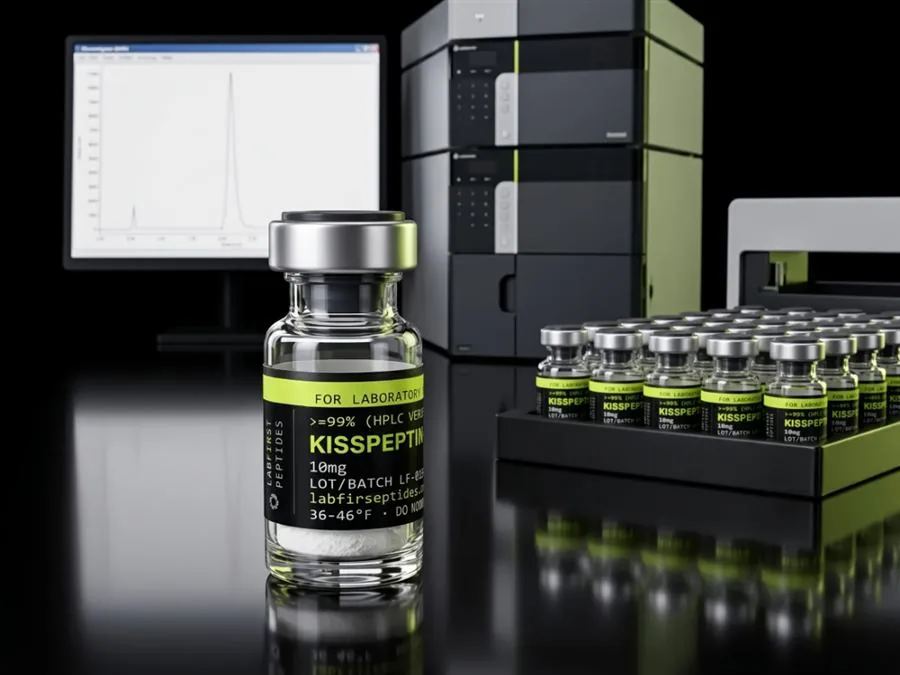
At Ulster University's Center for Diabetes, a group compared kisspeptin-14, kisspeptin-13 and kisspeptin-10 in a paper in Metabolites dated 17 September. The stability work comes first in their design and is the part to keep. Incubated in mouse plasma, kisspeptin-14 resisted degradation. Kisspeptin-13 and kisspeptin-10 were both clipped at the N-terminus, and kisspeptin-13 broke down into kisspeptin-10 among other fragments. The rest of the paper is beta-cell and mouse metabolic work, in which the isoforms behaved differently enough that the authors argue they should not be treated as interchangeable. Anyone reading an older paper that just says "kisspeptin" should keep that in mind.
The Laboratory of Protein Science at Hokkaido University reported in the International Journal of Biological Macromolecules on 11 September how they got recombinant LL-37 out of E. coli without it clumping. LL-37 aggregates readily, which has made bacterial production awkward. Fused to calmodulin, the peptide stayed soluble where a conventional thioredoxin tag did not, and enterokinase cut it free cleanly. NMR showed the two halves of the fusion holding onto each other. Like last edition's Bacillus paper on BPC-157, it is a reminder that a peptide made by expression carries a different impurity profile from one made on a synthesiser.
Chemists at the University of Wroclaw worked out, in Dalton Transactions on 8 September, how LL-37 binds copper and zinc. At physiological pH both metals sit on the N-terminal amine and a carboxylate. Above it, copper pulls in backbone nitrogens and forms very stable complexes, while zinc goes its own way. Swapping the chirality of a short fragment barely changed copper binding and did change zinc binding. None of this is antimicrobial efficacy. It is coordination chemistry, measured by potentiometry and spectroscopy, and it is the kind of result a certificate of analysis never mentions.
What gets through skin, and what stays on top
Two skin papers arrived in the same month from opposite directions, and they make more sense read together.
The School of Pharmacy at the University of Nottingham, working with the Boots No7 laboratory, published in the International Journal of Pharmaceutics on 23 September. Three volunteers had serums applied to their skin, which was then tape-stripped layer by layer and read by secondary ion mass spectrometry. The two peptides in Matrixyl 3000, palmitoyl tripeptide-1 and palmitoyl tetrapeptide-7, were detected in the stratum corneum, but their signal fell away at once with depth, and longer contact made no significant difference. The authors read that as the peptides sitting on the outer surface. It is an unfavorable result for anyone assuming these molecules travel far, and it came partly from a cosmetics company's own lab.
At Georgia Tech, a chemical engineering group reported in Advanced Healthcare Materials on 9 September on STAR particles, tiny star-shaped microneedles, rebuilt from biodegradable polymers. One of their three test compounds was copper tripeptide-1, which is GHK-Cu, delivered into pig skin ex vivo. Intradermal delivery across the model drugs rose by as much as 37-fold, depending on material and contact time. That figure belongs to excised pig skin and a physical device, and says nothing about the molecule on its own. What the two papers share is a finding about the barrier. Left alone, the stratum corneum stops most of what is put on it.
Receptors doing unexpected jobs
Last edition closed on orexin receptors as an example of a well-mapped mechanism. This month a thymic peptide turned up at one of them.
The Third Affiliated Hospital of Sun Yat-sen University reported in Advanced Science on 3 September that thymosin alpha-1 binds HCRTR1, the orexin-1 receptor, on neurons and suppresses RIPK3-driven necroptosis. The models are neuronal cells and mouse stroke. Mice lacking Ptma, the gene that encodes the peptide, had worse injury, and circulating levels were lower in stroke patients as well as in mice. That human part is a correlation in blood samples, with no treatment involved. An immune peptide acting through a classic neuropeptide receptor is an odd result, and it needs someone else to reproduce it.
Prohibitin, the protein the Adipotide homing sequence was built to find, came up again. Investigators at the University of Manitoba and UTHealth Houston replaced a single conserved cysteine, residue 69, with alanine in knock-in mice, and reported in the Journal of Lipid Research on 23 September that the mutant protein no longer reached the cell surface. Adipocytes took up and released long-chain fatty acids poorly, and the phenotype differed between males and females. The surface-exposed form that the homing peptide targets turns out to hinge on one residue.
Two smaller items belong here too. From the Institute of Experimental Medicine in Saint Petersburg, a purely computational study in In Silico Pharmacology on 6 September simulated kisspeptin-10 against its own receptor and several dopamine and serotonin receptors, and found it bound its own receptor most tightly. The authors say experimental confirmation is still needed. Midwestern University reported in NeuroSci on 3 September that naturally occurring oxytocin variants triggered calcium signalling and neurite outgrowth in SH-SY5Y cells, a human-derived neuron-like line that expresses the receptor without being engineered to.
Controls that separate the drug from the diet
Two incretin papers earned a place for their design as much as their result. Both used pair-fed controls, animals given exactly what the treated animals chose to eat, so that the effects of eating less can be told apart from effects of the molecule.
The Novo Nordisk Foundation Center for Basic Metabolic Research at the University of Copenhagen, with Gothenburg, reported in Nature Metabolism on 15 September that retatrutide combined with cagrilintide produced more weight loss in diet-induced obese male rats than either alone, and more than equivalent combinations built on semaglutide or tirzepatide. Pair-feeding and weight-matching showed that reduced intake did not account for all of it, and plasma proteomics and brain transcriptomics ran alongside. These are male rats only. The paper's own argument is for designing future single molecules, which is a different claim from anything about the two compounds as a pair.
The University of Calgary and Penn State published in Molecular Metabolism on 3 September on semaglutide and the gonads of obese male and female rats. The pair-fed arm did most of the work. Several changes in males appeared in both groups and so followed weight loss, while some hormone changes in each sex were specific to the drug. The GLP-1 receptor was expressed 4.7 times more in testes than in ovaries.
The same question of what exactly is being tested sits under an NNMT paper in the Journal of Investigative Dermatology on 9 September, from the University of Michigan with Northwestern and the Mayo Clinic. Their inhibitor, II559, is a bisubstrate compound and a different molecule from 5-amino-1MQ, so nothing transfers by name. In TGF-beta-stimulated and scleroderma fibroblasts, and in a bleomycin mouse model, it lowered 1-methylnicotinamide, restored methylation potential and reduced dermal thickening, while the repressive H3K27me3 chromatin mark rose. The paper speaks to the enzyme. It says nothing about any other inhibitor of it.
Mixed and null results, reported on the same terms
A column that only relays favorable findings is advertising, so here are this month's mixed ones.
A group at the Universidade Estadual de Santa Cruz in Brazil gave kisspeptin-10 to pregnant rats made hypothyroid, and reported in Cardiovascular Toxicology on 11 September on the offspring's hearts. Cardiomyocyte proliferation and postnatal weight gain recovered. Oxidative DNA damage and endoplasmic reticulum stress markers rose in the fetal hearts, though. The authors call the rescue partial, which is accurate.
From the University of Sao Paulo and Texas A&M, in Biology of Reproduction on 11 September, came a crossover study in ovariectomised heifers of two cattle breeds. Hourly kisspeptin or gonadorelin produced the expected extra LH pulses. The hypothesis was that this priming would amplify a later GnRH-induced LH surge, and it did not. The surge was simply smaller in Brahman heifers than in Herefords, whatever the pretreatment. It is a clean negative from a well-built design, and a warning against assuming that more frequent stimulation means a bigger response.
Two NMN papers round this out, both in rodents or rodent cells. Naval Medical University in Shanghai reported in Pharmacological Research on 14 September that NMN reduced ferroptosis in an LPS liver-injury mouse model by loosening an interaction between STING and ACSL4. A Fudan University group reported in the Journal of Aging Research on 22 September on D-galactose-aged C2C12 muscle cells. That model is chemically induced and a long way from ageing, which the paper does not dwell on.
Three preprints, labeled as such
None of these has been peer reviewed, and each is here with that stated first.
A Research Square preprint posted on 21 September reports lifelong NMN in male and female mice. Median lifespan rose by 8.5 percent in females and did not rise in males, where inflammatory pathways went up instead. A sex split like that is exactly what peer review tends to probe.
A Preprints.org manuscript from 7 September used a language model, with physicians checking its work, to read de-identified clinical notes from a US network for mentions of BPC-157. Documented use rose steeply between 2020 and 2026, and where a source was recorded, compounding pharmacies and grey-market vendors were named about equally. It is a record of what clinicians wrote down. It cannot say what was in anyone's vial.
A narrative review of epitalon, posted on 9 September, draws a distinction this column shares. Epitalon, the synthetic tetrapeptide, and epithalamin, the older pineal extract, are different materials, and their literatures should not be read as one.
What was cut, and what never turned up
Seven candidates did not make it. A study of what was actually inside products sold as retatrutide in Australia, from the University of Queensland in Drug and Alcohol Review, carries a September issue date but was indexed online on 6 August. A University of Miami paper on growth hormone-releasing hormone and HIF-1 alpha in the heart went online on 1 August. A lipidated octreotide paper from Taipei appeared on 25 August. All three fell between the last sweep and this one, and none will be backfilled under a month it does not belong to.
A thymosin alpha-1 paper in Cancer Research had been online since June, and a melanotan case report since May. A MOTS-c study of lung injury in the Chinese Medical Journal has no public abstract and a paywalled text, so it could not be read against the four questions. Novo Nordisk's CagriSema phase 3 toplines of 21 September are a company announcement with no paper behind them yet.
Clinical trials and meta-analyses of prescription incretin drugs, and trial work on afamelanotide, sit outside this sweep. They are medical literature about licensed medicines, which is not what this catalog is for.
Most families produced nothing at all. TB-500, Selank, Semax, DSIP, the growth hormone secretagogues and releasing-hormone analogues, the IGF-1 variants, the short bioregulator peptides, SS-31, AOD9604 and PT-141 had no qualifying September paper. For compounds with small research communities that is the normal state of things. October's sweep runs at the end of that month.
FOR LABORATORY AND IN-VITRO RESEARCH USE ONLY. NOT FOR HUMAN OR ANIMAL CONSUMPTION. NOT FOR PERSONAL, MEDICAL, DIAGNOSTIC, THERAPEUTIC, OR RECREATIONAL USE.
Common questions
Why was the retatrutide product-testing study left out?
Does the Cochrane review mean thymosin alpha-1 does not work?
Why include a study run partly by a cosmetics company on its own ingredient?
Why are preprints included at all?
How many compound families had nothing new this month?
More science guides
Sources
- BPC 157 in Rodent Ischemia-Reperfusion Injury: A Critical Review of Preclinical Evidence. International Journal of Molecular Sciences doi:10.3390/ijms27188344. Gazi University; critical review of the rodent ischemia-reperfusion literature, not pooled because of heterogeneity.
- Thymosin-alpha1 for people with chronic hepatitis B. Cochrane Database of Systematic Reviews doi:10.1002/14651858.CD014610.pub2. James Cook University and Newcastle University; ten randomised trials, certainty graded low to very low.
- Clinical Applications and Evidence Landscape of Thymosin Alpha 1 as an Immunomodulatory Adjunct in Cancer Care: A Scoping Review. Pharmaceuticals doi:10.3390/ph19091492. Wonkwang University; 26 clinical publications charted, mostly retrospective studies or case reports.
- Enzymatic Stability and Comparative Effects of Kisspeptin-14, Kisspeptin-13 and Kisspeptin-10 on Beta-Cell Function, Glucose Homeostasis and Appetite Regulation. Metabolites doi:10.3390/metabo16090686. Ulster University; source of the plasma stability comparison between isoforms.
- Calmodulin-tagging prevents aggregation and facilitates the proteolytic release of the recombinant human cathelicidin LL-37. International Journal of Biological Macromolecules doi:10.1016/j.ijbiomac.2026.154370. Hokkaido University; detergent-free recombinant production in E. coli.
- Coordination chemistry and antimicrobial activity of LL-37, its C-terminal fragment, and a peptidomimetic analogue. Dalton Transactions doi:10.1039/d6dt01638c. University of Wroclaw; copper and zinc coordination modes by potentiometry and spectroscopy.
- Permeation behaviour of cosmetic actives into the human stratum corneum. International Journal of Pharmaceutics doi:10.1016/j.ijpharm.2026.127447. University of Nottingham with the Boots No7 laboratory; SIMS depth profiling of tape-stripped skin.
- Water-Soluble, Enzyme-Degradable, and Hydrolyzable STAR Particles for Enhanced Drug Delivery to Skin. Advanced Healthcare Materials doi:10.1002/adhm.71569. Georgia Institute of Technology; ex vivo porcine skin, with copper tripeptide-1 among three model drugs.
- Thymosin Alpha-1 Provides Direct Neuroprotection by Engaging the Orexin Receptor HCRTR1 to Suppress Neuronal Necroptosis. Advanced Science doi:10.1002/advs.202522372. Third Affiliated Hospital of Sun Yat-sen University; neuronal cells and a mouse stroke model.
- Prohibitin-1 cysteine-69 plays a sex-dependent role in fatty acid metabolism. Journal of Lipid Research doi:10.1016/j.jlr.2026.101158. University of Manitoba and UTHealth Houston; cysteine-69 knock-in mice lacking surface prohibitin.
- Structural basis for Kisspeptin-10 selectivity toward KISS1R: computational insights. In Silico Pharmacology doi:10.1007/s40203-026-00726-0. Institute of Experimental Medicine, Saint Petersburg; molecular dynamics only, no experiment.
- Oxytocin Variants Induce Cellular Signaling and Neurite Outgrowth in Human-Derived Neuron-like SH-SY5Y Cell Line. NeuroSci doi:10.3390/neurosci7050100. Midwestern University; endogenous receptor in a human-derived cell line.
- Cagrilintide and retatrutide combination therapy enhances weight loss and metabolic outcomes in obese male rats. Nature Metabolism doi:10.1038/s42255-026-01603-y. University of Copenhagen and University of Gothenburg; pair-fed and weight-matched controls in male rats.
- Beyond weight loss: Disentangling the direct effects of semaglutide vs equivalent calorie restriction on reproductive systems of male and female rats. Molecular Metabolism doi:10.1016/j.molmet.2026.102436. University of Calgary and Penn State; pair-fed design separating the drug from weight loss.
- A Bisubstrate Inhibitor of NNMT Suppresses Myofibroblast Reprogramming to Mitigate Skin Fibrosis. Journal of Investigative Dermatology doi:10.1016/j.jid.2026.07.037. University of Michigan, Northwestern and Mayo Clinic; the inhibitor is II559, a different molecule from 5-amino-1MQ.
- Maternal Kisspeptin-10 Treatment Partially Rescues Fetal and Postnatal Cardiac Programming Disrupted by Maternal Hypothyroidism. Cardiovascular Toxicology doi:10.1007/s12012-026-10185-w. Universidade Estadual de Santa Cruz; partial rescue alongside raised oxidative and ER stress markers.
- Effects of high frequency administration of GnRH or kisspeptin on LH pulse and surge profiles in ovariectomized Bos taurus and Bos indicus heifers. Biology of Reproduction doi:10.1093/biolre/ioag198. University of Sao Paulo and Texas A&M; the hypothesised surge amplification did not occur.
- NMN mitigates LPS-induced liver injury by inhibiting ferroptosis via suppression of the cGAS-STING-ACSL4 axis. Pharmacological Research doi:10.1016/j.phrs.2026.108454. Naval Medical University, Shanghai; mouse and primary cell models.
- beta-Nicotinamide Mononucleotide Inhibits Cellular Senescence in Mouse C2C12 Skeletal Muscle Cells. Journal of Aging Research doi:10.1155/jare/4970524. Fudan University; D-galactose-induced senescence in a mouse muscle cell line.
- Long-term NMN treatment increases lifespan and healthspan in mice in a sex dependent manner. Research Square preprint, not peer reviewed doi:10.21203/rs.3.rs-10913337/v1. Preprint; male and female mice, with a lifespan difference reported in females only.
- Rising Use of Unapproved BPC-157 and Associated Patient-Reported Outcomes Curated from Clinical Notes. Preprints.org preprint, not peer reviewed doi:10.20944/preprints202609.0501.v1. Preprint; language-model curation of de-identified clinical notes with physician validation.
- Epitalon and Epithalamin in Regenerative and Longevity Medicine: Mechanisms, Evidence, and Translational Gaps. Preprints.org preprint, not peer reviewed doi:10.20944/preprints202609.0801.v1. Preprint narrative review; separates the synthetic tetrapeptide from the pineal extract.