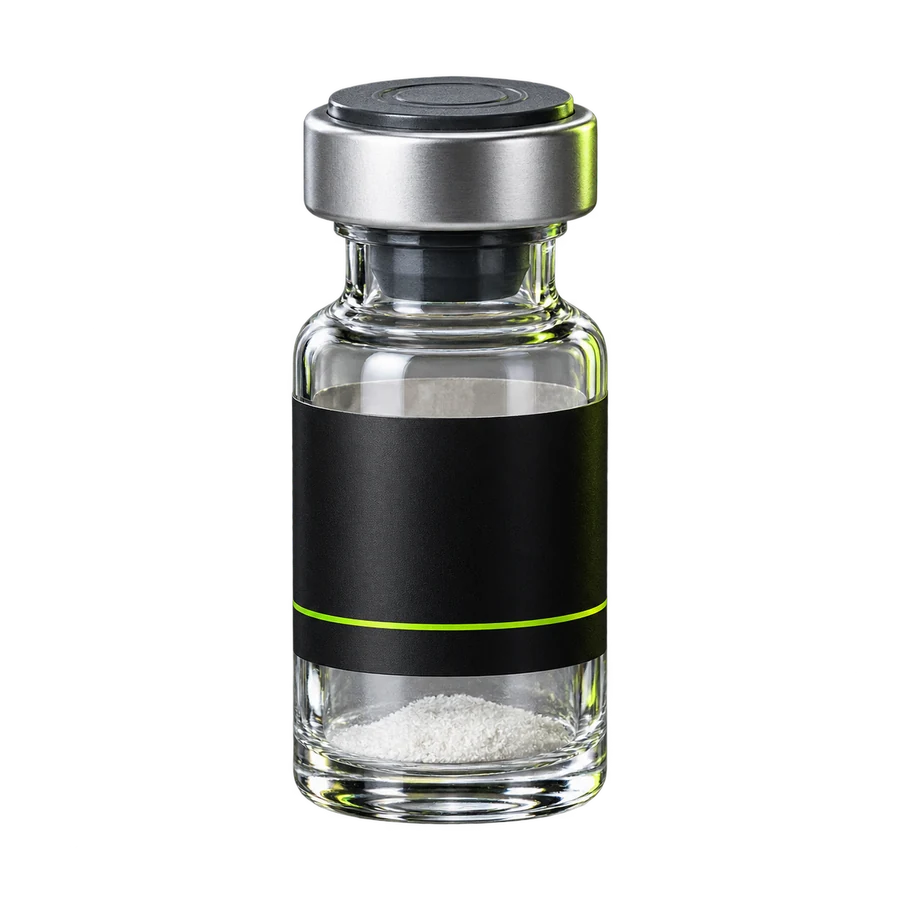
Private label peptides put your name on the vial, and with it the compliance, quality and liability story. That story becomes yours, not the manufacturer's. It makes sense once demand is proven and checking each lot is routine. Done first, it puts your brand on someone else's mistakes at kit-order prices.
- White-label means their product with your sticker; private-label adds control over spec, fill and presentation
- The label transfers responsibility: your name on the vial makes quality and compliance failures yours
- Realistic all-in private-label unit costs run 30–80% above bare kit prices once testing and labeling are included
- Label content is regulated ground: intended-use language on your label is your legal exposure
- Branding is worth it when repeat customers exist; it cannot create them
White-label, private-label, and the difference that matters
Imagine a store putting its own name on a product someone else made. The label carries the store's name, so any problem with what is inside becomes the store's problem too.
The terms get used interchangeably by suppliers, and the distinction is worth money. White-label is their standard product, their fill, their spec, with your label applied, sometimes literally a sticker over theirs. You control presentation and nothing else. Private-label means the production run carries your specifications: fill sizes you chose, cap colors, your label applied at filling, sometimes your choice of testing regime and documentation format. The line between them is control, and control is what you are paying the premium for.
What neither term changes is where the material comes from. Your branded vial contains the same synthesis output as the unbranded kit beside it on the manufacturer's floor, which cuts both ways: there is no artisanal premium peptide hiding behind a brand, and there is no escaping the underlying material's quality by branding it. A brand is a promise-keeping device, not a chemistry upgrade.
What the label does change, entirely, is whose promise it is. The moment your name is on the vial, every quality event, every net-content miss, every compliance question about the words on that label, is a conversation about your business. Manufacturers understand this asymmetry well, which is why private-label programs are so cheerfully offered: the margin is yours, and so is everything else.
The real cost structure, itemized
Bare kit pricing is the number suppliers quote; the private-label unit cost is what your model has to run on, and the gap is 30 to 80 percent once the honest lines are in.
| Line | Typical range | Notes |
|---|---|---|
| Base kit cost (100–500 vial runs) | $2.00–6.00 | The quoted number |
| Label design, printing, application | $0.30–1.20 | Application at filling beats stickering at your desk |
| Independent verification per lot | $0.40–2.00 | Amortized; non-negotiable under your own name |
| Compliance review of label and copy | $0.10–0.50 | Amortized legal review; cheap insurance |
| Freight, customs, payment costs | $0.40–1.50 | The standard landed-cost stack |
| Waste, damage, minimum-run overrun | $0.20–0.80 | Runs are quantized; demand is not |
The last line deserves emphasis because it is the one first-time private-labelers miss: label runs and fill runs have minimums, and the gap between the minimum and your actual demand is inventory you own at full cost. A 500-vial branded run against 200 vials of quarterly demand is fifteen months of capital sleeping in a refrigerator under a label you cannot return to stock. The pricing mechanics behind these decisions are the same ones covered in our bulk pricing and MOQ guide; branding just raises the stakes on getting them right.
The label itself is regulated ground
The words on a private-label vial are the single most legally consequential text your business produces. Intended-use doctrine reads the label first: what the product is called, what statements surround it, whether the research-use restriction is present and unambiguous, whether anything on the label or the linked branding implies use in people. A manufacturer's stock label has usually survived scrutiny; yours starts from zero, and 'we copied what everyone does' is not a defense that has ever worked.
The floor for a defensible research-compound label: exact compound identity as named in the documentation, net quantity as tested rather than as aspired to, lot number applied at filling, storage statement consistent with the stability record, the unambiguous research-use-only restriction, and your business identity so responsibility is locatable. What does not belong: anything that reads as a benefit, a protocol, or a wink. Have the label and every piece of branded material reviewed together by counsel who has seen this category, once, before the first run; the review costs less than the label plates.
FOR LABORATORY AND IN-VITRO RESEARCH USE ONLY. This guide concerns branding and labeling research material under a compliant posture; nothing in it is a statement about use in people or animals. Our own labeling and documentation practice is published in the quality standard, which doubles as a working example of the floor described here.
Quality control when the name on the vial is yours
Private labeling inverts the verification logic of ordinary reselling. A reseller of a manufacturer's branded kit shares reputational exposure with the manufacturer; a private-labeler absorbs all of it. That changes the QC posture from prudent to structural. Every lot gets independent identity, purity and net-content testing before a single branded vial ships, no exceptions for clean history, because the history that matters to your customers now starts at your brand's first lot. Sampling plans, laboratory selection and failure protocol are the same machinery described in our bulk COA verification guide, run at the strict end of every range.
Two additions are specific to private label. First, fill verification against your own spec: you chose the fill sizes, so under-fill is now measured against your label, and the acceptable-deviation line belongs in the filling contract with a remedy attached, not in a post-hoc negotiation. Second, documentation under your name: your customers should receive lot documentation formatted and published by you, built on the independent results, because a branded vial pointing at a manufacturer's paperwork advertises exactly where the brand ends.
The operational summary is blunt: if per-lot verification is not already a boring routine in your operation, private labeling converts that gap into a branded liability. The sequence is verification first, brand second, and the businesses that invert it are putting their name on their supplier's next mistake.
When branding is worth it
A brand earns its costs through exactly three mechanisms, and it pays to be honest about which you expect. Retention: repeat customers who reorder by name rather than re-shopping the market each cycle; this is the real one, and it requires that repeat customers already exist. Price integrity: a documented brand escapes some commodity comparison, holding a margin point or two against undocumented competition. Wholesale doors: some downstream buyers prefer stocking a consistent brand with published QC over rotating gray kits.
What a brand cannot do is create demand you do not have, rescue thin verification, or out-market the compliance constraints of this category, since the channels where branding usually shouts, paid social, marketplaces, influencer placement, are closed to it here. That is why sequencing dominates the decision. The businesses for which private label works share a profile: proven repeat demand on a narrow core catalog, verification running as routine, a stable payment rail, and customer requests for consistency arriving unprompted. For them, branding compounds what already works.
Started before that profile exists, private label is expensive theater: minimum runs against unproven demand, a liability surface without a reputation to justify it, and capital that should have bought testing and depth spent on label plates. The unglamorous path, resell documented product, prove the demand, build the QC muscle, then brand the core, is slower by two or three quarters and safer by an order of magnitude.
Running the program: contracts, runs, and the first year
When the profile fits, the program itself is manageable. The filling contract carries the load: your spec (compound, source material documentation, fill sizes, tolerances), label application at filling with lot numbers assigned there, agreed remedy terms for spec misses, and your unrestricted right to sample and test. Run sizes start at the smallest quantity the economics tolerate, because the first runs are process shakedowns whatever the spreadsheet says: label adhesion in cold storage, carton survival in transit, documentation flow from filler to your files, all of it gets debugged on run one.
Plan the first year around three to four runs rather than one big one. Smaller repeated runs cost more per vial and buy you current lots, fresher stability clocks, demand feedback between runs, and the option to adjust sizes and specs while adjustments are cheap. Keep the unbranded distributor channel warm underneath the brand for the long tail and for continuity; a branded stockout sends customers back to the market you worked to remove them from.
And keep the brand's promise mechanical: publish the per-lot documentation, answer provenance questions with records, honor the remedy terms fast and visibly. In this market a brand is nothing but a verification reputation with a logo on it. Maintained that way, it is the one asset in the whole operation that competitors cannot order from a catalog.
Common questions
How much does it cost to start a private label peptide line?
What is the difference between white label and private label peptides?
Am I legally responsible for what is on my private label?
Do private label peptides sell better than unbranded ones?
What minimum order sizes do private label peptide programs require?
More procurement guides
Sources
- FDA intended-use doctrine as applied to labeling and surrounding promotional material. Basis for treating the private label itself as the central compliance document.
- Contract filling and labeling run minimums across overseas peptide manufacturers, surveyed 2026. Basis for run-size bands and the cost-stack lines.
- USP peptide content and purity methodology. Basis for fill-verification against label claim as a contract term with remedies.