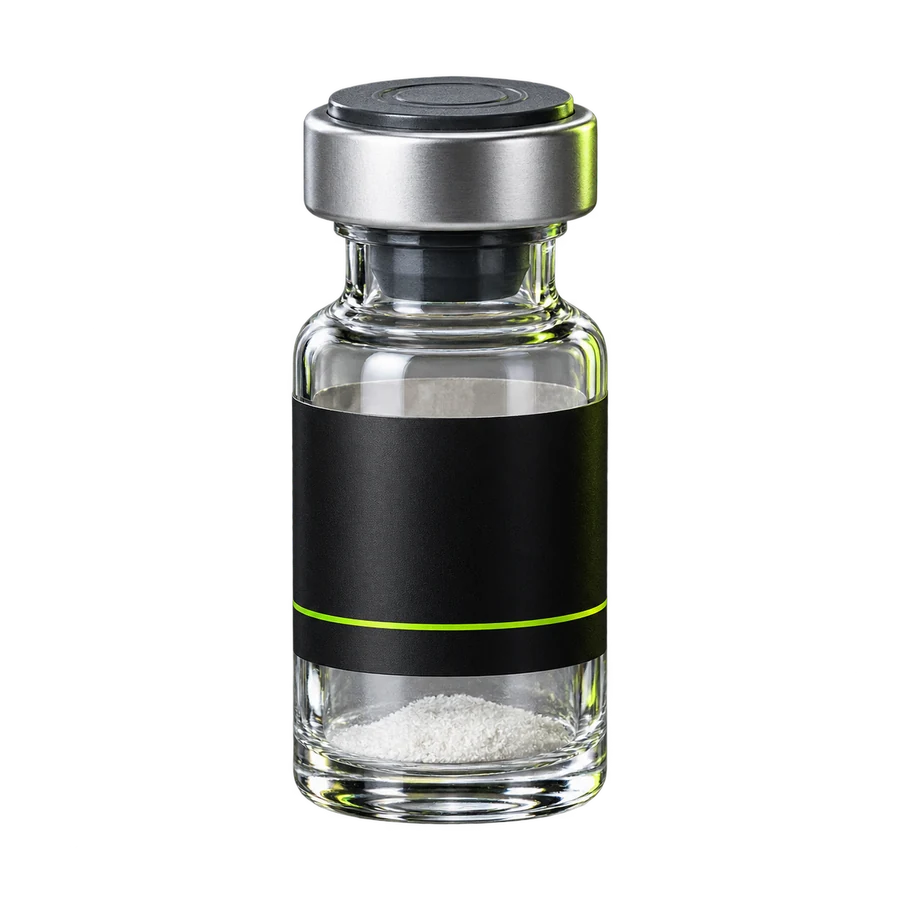
This page compares what is documented about BPC 157 and TB-500, rather than ranking them by effect. What each molecule is, the sizes and prices actually carried, what the certificate covers, and how the two differ on the bench. Everything here is research-use-only material and we do not publish outcome, dosing or administration content for any compound in the catalog.
What is BPC 157 and what is TB-500?
BPC 157. BPC 157, a stable gastric pentadecapeptide, appears across preclinical tissue-repair models — tendon, ligament, gut epithelium — making it one of the most-requested research compounds we stock.
TB-500. TB-500 maps to the actin-binding domain of thymosin beta-4, a protein studied across cell-migration and repair-model research for two decades.
How do BPC 157 and TB-500 compare on price and size?
| BPC 157 | TB-500 | |
|---|---|---|
| Sizes carried | 5 mg, 10 mg | 5 mg, 10 mg |
| From | $49.00 | $54.00 |
| Best price per unit | $5.90 / mg | $7.50 / mg |
| Availability | Backordered — waitlist | Backordered — waitlist |
| Certificate | Lot certificate on the product page | Lot certificate on the product page |
| Molecular formula | C62H98N16O22 | C38H68N10O14 |
| Molar mass | 1,419.5 g/mol | 889 g/mol |
| Source | PubChem CID 9941957 | PubChem CID 62707662 |
| Research area | tissue-repair model research | actin-regulation research |
At their best sizes BPC 157 works out at $5.90 per mg against $7.50 for TB-500 — 27% more for the mg. Vial prices start at $49.00 and $54.00 respectively, which is the number most people compare and the one that says least, because the two are not sold in the same sizes. Full sizes, tier pricing and the lot certificate sit on the BPC 157 peptide page and the TB-500 peptide page.
What is each one studied for?
What the published literature investigates, which is a different question from what either will do, and the only one of the two a supplier can answer.
BPC 157 is studied in tissue-repair model research. Preclinical tissue-repair modeling continues to feature BPC 157 heavily, with new cellular and animal-model work appearing steadily.
TB-500 is studied in actin-regulation research. Actin-regulation research keeps thymosin beta-4 and its fragments in steady rotation across cell-migration studies.
Studied in the same area does not make two compounds interchangeable, and the research library holds the per-compound documentation.
TB 500 vs BPC-157: how they differ on the bench
TB-500. TB-500 in solution is a different molecule, stability-wise, than the sealed lyophilizate — date the vial the moment BAC water touches it.
BPC 157. BPC 157 is unusually stable for a peptide, but stability in acid is not stability in solution on a bench — the storage guide covers the difference.
On naming, because the two are written several ways and the difference is not always obvious: BPC 157 is also written bpc-157; TB-500 is also written tb 500 or tb500. They refer to the same materials described here, and the certificate for a lot uses the name on this page. The comparison itself is usually typed BPC-157 vs TB 500.
A note on a question this page does not answer. BPC 157 and TB-500 are also searched together, as “bpc 157 and tb 500”, and that phrasing usually means somebody is asking about combining them. We do not publish combination guidance, because it would be guidance about use and this material is sold for laboratory work only. What is on this page instead is what each compound is, what each vial costs per unit, and what the certificate for a lot covers. Two peptides held in one solution also raise a separate and duller question about stability and about what a single certificate can honestly report, which is worth reading about on the blends before assuming a mixture behaves like its parts.
What actually differs between TB-500 and BPC 157
Worth doing the arithmetic before comparing sizes: BPC 157 is 1,419.5 g/mol and TB-500 is 889 g/mol, a factor of 1.6. A milligram of TB-500 therefore contains roughly 1.6 times as many molecules as a milligram of BPC 157, so two vials of the same labeled mass hold quite different amounts of substance. Equal milligrams are not equal moles, which is what the molarity calculator exists to convert, and it is the reason a price-per-milligram comparison and a price-per-mole comparison can point at different vials.
Identity is the other analytical axis, and it is settled per lot rather than per compound. BPC 157. Cataloged as BPC-157, and the certificate's identity test resolves to that. TB-500. Cataloged as TB-500, and the certificate's identity test resolves to that.
Both are released against a certificate reporting identity, purity by the stated method and net peptide content, readable before anything is bought.
Which is better, TB 500 or BPC-157?
Neither TB 500 nor BPC-157 is ranked against the other here, and the refusal is deliberate. Better, safer and stronger are questions about effects in a living system, and we sell neither compound for use in one — why none of these pages ranks two compounds sets out the reasoning in full.
What it does instead, for these two:
- BPC 157 is the cheaper of the two per mg, at $5.90 against $7.50.
- BPC 157 is the heavier molecule by a factor of 1.6, so equal milligrams are not equal moles.
- Both are carried in 2 sizes, and each lot carries its own certificate.
Every one of those is checkable before you buy.
Common questions
What is the difference between TB-500 and BPC 157?
Different molecules before anything else: TB-500 is C38H68N10O14 and BPC 157 is C62H98N16O22. TB-500 maps to the actin-binding domain of thymosin beta-4, a protein studied across cell-migration and repair-model research for two decades. BPC 157, a stable gastric pentadecapeptide, appears across preclinical tissue-repair models — tendon, ligament, gut epithelium — making it one of the most-requested research compounds we stock.
Should I choose BPC 157 or TB-500?
BPC 157 is carried in 5 mg, 10 mg and TB-500 in 5 mg, 10 mg, each lot with its own certificate. Which of those suits the work is yours to decide; everything here is research-use-only rather than guidance for use in a human or an animal.
Do both BPC 157 and TB-500 come with a certificate of analysis?
Neither is in stock at the moment, so in each case the certificate is the one attached to the lot that arrives. A certificate belongs to a lot, not to a product. It is linked from the product page, and reports identity, purity by the stated method, and net peptide content for the material actually in that lot.
Which is cheaper, TB-500 or BPC 157?
Per mg, BPC 157 at $5.90 against $7.50, taking each one's best size. By vial they start at $49.00 for BPC 157 and $54.00 for TB-500, which is the comparison most people make and the one that says least, because the two are not sold in the same sizes.
Is a milligram of BPC 157 the same as a milligram of TB-500?
By mass yes, by amount of substance no. BPC 157 is 1,419.5 g/mol and TB-500 is 889 g/mol, a factor of 1.6, so a milligram of TB-500 holds roughly 1.6 times as many molecules. Two vials with the same number on the label are not the same amount of substance, which is what the molarity calculator converts.
FOR LABORATORY AND IN-VITRO RESEARCH USE ONLY. NOT FOR HUMAN OR ANIMAL CONSUMPTION. NOT FOR PERSONAL, MEDICAL, DIAGNOSTIC, THERAPEUTIC, OR RECREATIONAL USE.