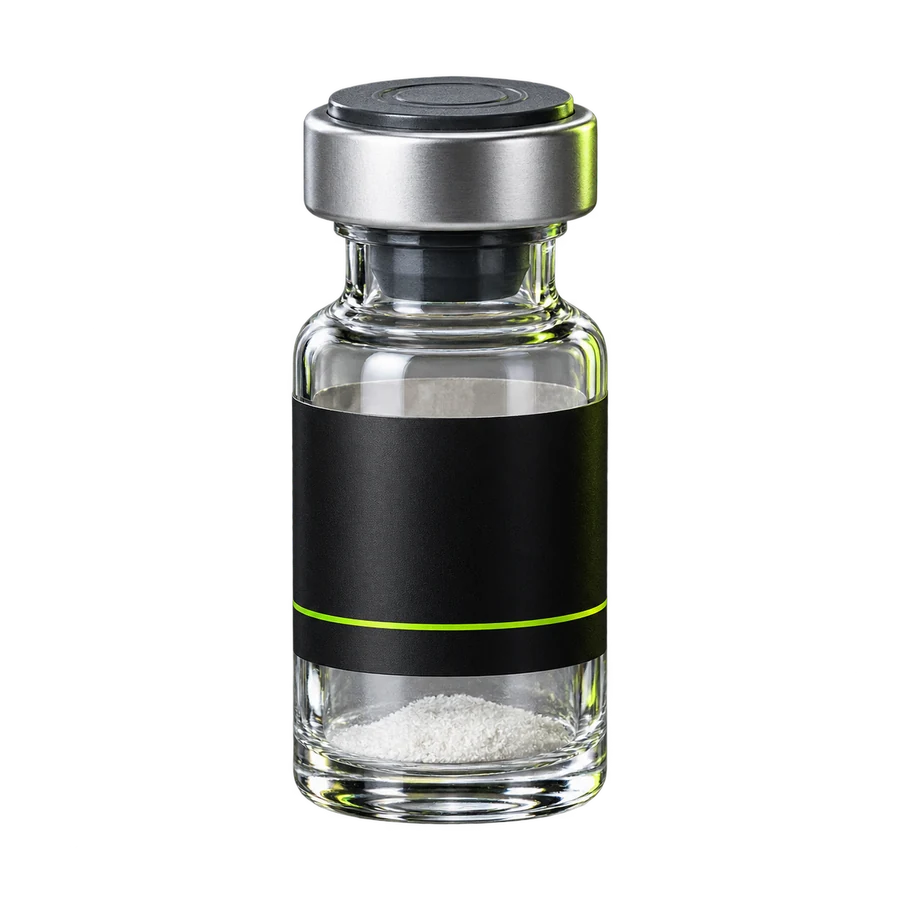
This page compares what is documented about AHK-Cu and GHK-Cu, rather than ranking them by effect. What each molecule is, the sizes and prices actually carried, what the certificate covers, and how the two differ on the bench. Everything here is research-use-only material and we do not publish outcome, dosing or administration content for any compound in the catalog.
What is AHK-Cu and what is GHK-Cu?
AHK-Cu. AHK-Cu is GHK-Cu's less famous sibling — a copper tripeptide studied in follicle and dermal-papilla cellular models, with a smaller but distinct literature.
GHK-Cu. GHK-Cu has one of the longest citation trails in peptide science — from Pickart's 1973 isolation through modern work on collagen expression in cellular models.
How do AHK-Cu and GHK-Cu compare on price and size?
| AHK-Cu | GHK-Cu | |
|---|---|---|
| Sizes carried | 20 mg, 50 mg | 50 mg, 100 mg |
| From | $50.00 | $49.00 |
| Best price per unit | $1.20 / mg | $0.59 / mg |
| Availability | Backordered — waitlist | Backordered — waitlist |
| Certificate | Lot certificate on the product page | Lot certificate on the product page |
| Molecular formula | C15H26N6O4 | C14H24N6O4 |
| Molar mass | 354.41 g/mol | 340.38 g/mol |
| Source | PubChem CID 7408502 | PubChem CID 73587 |
| Research area | copper-peptide research | copper-peptide research |
At their best sizes GHK-Cu works out at $0.59 per mg against $1.20 for AHK-Cu — 2.0 times more for the mg. Vial prices start at $50.00 and $49.00 respectively, which is the number most people compare and the one that says least, because the two are not sold in the same sizes. Full sizes, tier pricing and the lot certificate sit on the AHK-Cu peptide page and the GHK-Cu peptide page.
What is each one studied for?
What the published literature investigates, which is a different question from what either will do, and the only one of the two a supplier can answer.
AHK-Cu is studied in copper-peptide research. Copper-tripeptide research continues on both GHK and AHK complexes, with the dermal-model work the most active thread.
GHK-Cu is studied in copper-peptide research. Copper-peptide research remains active, with GHK-Cu's effect on gene expression in cellular models a recurring theme in the dermatological literature.
Studied in the same area does not make two compounds interchangeable, and the research library holds the per-compound documentation.
GHK-Cu vs AHK-Cu: how they differ on the bench
GHK-Cu. The blue is the copper complex itself: a GHK-Cu vial that is not blue is a red flag, and our identity testing covers both the peptide and the copper.
AHK-Cu. AHK and GHK differ by one residue and look near-identical in a vial; LC-MS is the only honest way to tell a lot of one from the other.
What actually differs between GHK-Cu and AHK-Cu
The two are within a few percent of each other on molar mass — AHK-Cu at 354.41 g/mol and GHK-Cu at 340.38 g/mol — so a milligram of one is close to the same number of molecules as a milligram of the other. That is unusual, and it is the only case where comparing the two by mass alone is nearly the same as comparing them by amount of substance.
Identity is the other analytical axis, and it is settled per lot rather than per compound. AHK-Cu. AHK-Cu as supplied is the copper(II) complex of that tripeptide, not the free peptide, so an identity test on this material does not resolve to the figures above. GHK-Cu. GHK-Cu as supplied is the copper(II) complex of that tripeptide, not the free peptide, so an identity test on this material does not resolve to the figures above.
Both are released against a certificate reporting identity, purity by the stated method and net peptide content, readable before anything is bought.
Which is better, GHK-Cu or AHK-Cu?
Neither GHK-Cu nor AHK-Cu is ranked against the other here, and the refusal is deliberate. Better, safer and stronger are questions about effects in a living system, and we sell neither compound for use in one — why none of these pages ranks two compounds sets out the reasoning in full.
What it does instead, for these two:
- GHK-Cu is the cheaper of the two per mg, at $0.59 against $1.20.
- Their molar masses are within a few percent, so a milligram of either is close to the same amount of substance.
- Both are carried in 2 sizes, and each lot carries its own certificate.
Every one of those is checkable before you buy.
Common questions
What is the difference between GHK-Cu and AHK-Cu?
Different molecules before anything else: GHK-Cu is C14H24N6O4 and AHK-Cu is C15H26N6O4. GHK-Cu has one of the longest citation trails in peptide science — from Pickart's 1973 isolation through modern work on collagen expression in cellular models. AHK-Cu is GHK-Cu's less famous sibling — a copper tripeptide studied in follicle and dermal-papilla cellular models, with a smaller but distinct literature.
Should I choose AHK-Cu or GHK-Cu?
AHK-Cu is carried in 20 mg, 50 mg and GHK-Cu in 50 mg, 100 mg, each lot with its own certificate. Which of those suits the work is yours to decide; everything here is research-use-only rather than guidance for use in a human or an animal.
Do both AHK-Cu and GHK-Cu come with a certificate of analysis?
Neither is in stock at the moment, so in each case the certificate is the one attached to the lot that arrives. A certificate belongs to a lot, not to a product. It is linked from the product page, and reports identity, purity by the stated method, and net peptide content for the material actually in that lot.
Which is cheaper, GHK-Cu or AHK-Cu?
Per mg, GHK-Cu at $0.59 against $1.20, taking each one's best size. By vial they start at $50.00 for AHK-Cu and $49.00 for GHK-Cu, which is the comparison most people make and the one that says least, because the two are not sold in the same sizes.
Is a milligram of AHK-Cu the same as a milligram of GHK-Cu?
By mass yes, and unusually so by amount of substance too: AHK-Cu is 354.41 g/mol and GHK-Cu is 340.38 g/mol, within a few percent, so a milligram of either is close to the same number of molecules. That is rarely true of two different peptides and it is worth checking rather than assuming.
FOR LABORATORY AND IN-VITRO RESEARCH USE ONLY. NOT FOR HUMAN OR ANIMAL CONSUMPTION. NOT FOR PERSONAL, MEDICAL, DIAGNOSTIC, THERAPEUTIC, OR RECREATIONAL USE.